Your Travel Adapter Won't Save Your Hair Dryer — Here's Why Devices Still Fry
The Adapter Assumption
Before your last international trip, you probably did what millions of Americans do: bought a universal travel adapter, assumed it would protect your electronics, and packed your hair dryer with confidence.
If your hair dryer survived the trip, you got lucky. If it didn't, you learned an expensive lesson about the difference between adapters and voltage converters.
The Plug vs. Power Problem
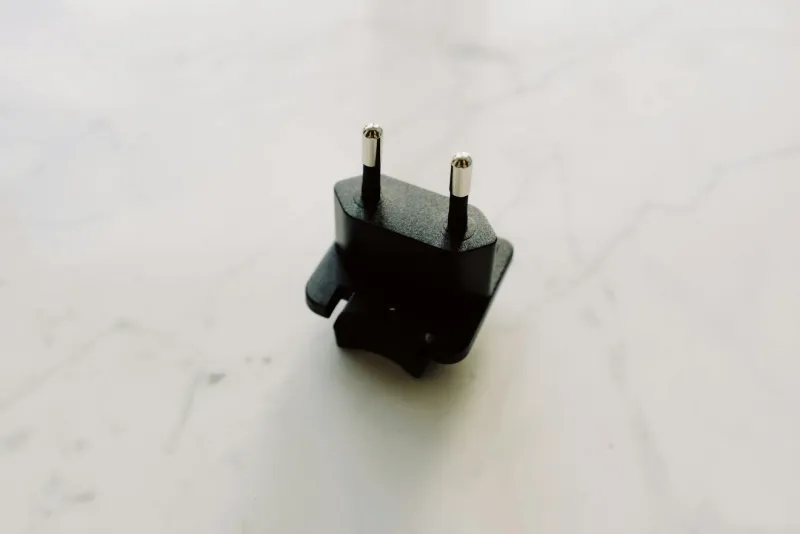
Here's the fundamental misunderstanding: travel adapters only solve the plug shape problem. They let you physically connect your American devices to foreign outlets, but they don't change the electrical power coming through the wall.
Most of the world runs on 220-240 volts, while the US uses 110-120 volts. When you plug a device designed for American voltage into a European outlet through a simple adapter, you're feeding it twice the power it was designed to handle.
For some devices, that extra voltage is instantly fatal.
Why Some Devices Survive and Others Don't
Most modern electronics — phones, laptops, tablets, camera chargers — are built to handle voltage differences automatically. Look at the fine print on your phone charger and you'll probably see something like 'Input: 100-240V.' That means it's designed to work anywhere in the world with just a plug adapter.
These 'dual voltage' devices have built-in converters that automatically adjust to whatever power they're receiving. Your phone charger is essentially a tiny transformer that steps down high voltage to whatever your device needs.
But plenty of common travel items aren't dual voltage. Hair dryers, curling irons, electric shavers, and small appliances are often designed only for American power. Plug these into foreign outlets through a simple adapter and they'll either blow out immediately or slowly fry their internal components.
The Voltage Converter Solution
A voltage converter (also called a transformer) actually changes the electrical power coming from the wall. It steps down 220V to 110V, making foreign electricity safe for American devices.
But converters have their own complications. They're heavy, expensive, and often unreliable for high-power devices like hair dryers. Many budget converters will work for a few minutes before overheating or failing.
Professional-grade converters that can safely handle hair dryers cost $100+ and weigh several pounds — more than most people want to pack for a vacation.
How to Tell If Your Device Is Dual Voltage
Check the label on your device or its power adapter. You're looking for input specifications:
'100-240V' or '110-240V' means it's dual voltage and will work anywhere with just a plug adapter.
'120V' or '110V' means it's designed only for American power and will need a converter abroad.
Some devices have a small switch that lets you toggle between 110V and 220V modes. These require manual adjustment but don't need converters.
The Hair Dryer Dilemma
Hair dryers are the most common casualty of voltage confusion because they draw high power and are rarely dual voltage. Even when they survive the initial voltage shock, they often run at double speed and half power, making them nearly useless.
The practical solution for most travelers is simple: don't pack a hair dryer. Most hotels provide them, and if you're staying somewhere that doesn't, buying a cheap local hair dryer is often easier than dealing with converters.
If you absolutely must travel with your own hair dryer, buy a dual voltage model specifically designed for travel. They're available, but they're not the same as your regular home hair dryer.
The Marketing Problem
Travel adapter packaging often shows pictures of hair dryers and other high-power devices, creating the impression that adapters protect everything. This isn't technically false advertising since the adapters will physically connect these devices to foreign outlets — they just won't prevent them from breaking.
Many travelers don't discover the voltage issue until they're abroad and their devices start malfunctioning. By then, it's too late to buy proper converters or dual voltage replacements.
What Actually Works for International Travel
For most travelers, the smart approach is simple:
Use adapters for dual voltage devices (phones, laptops, camera chargers).
Leave single-voltage appliances at home or buy dual voltage versions.
When in doubt, check device labels before you pack.
The exception is if you're traveling long-term or to places where replacement devices aren't available. In those cases, investing in a high-quality voltage converter might make sense.
The Bottom Line
That universal adapter you bought isn't protecting your electronics from foreign power — it's just making them fit foreign outlets. For most modern devices, that's fine because they're designed to handle voltage differences.
But for hair dryers, curling irons, and other single-voltage appliances, a simple adapter is like putting a square peg in a round hole: it might fit, but it's not going to end well.
Next time you travel internationally, read the fine print on your devices before you pack. Your hair dryer will thank you.