That 'Fresh' Fish Counter Salmon Has Been Frozen Longer Than You'd Guess
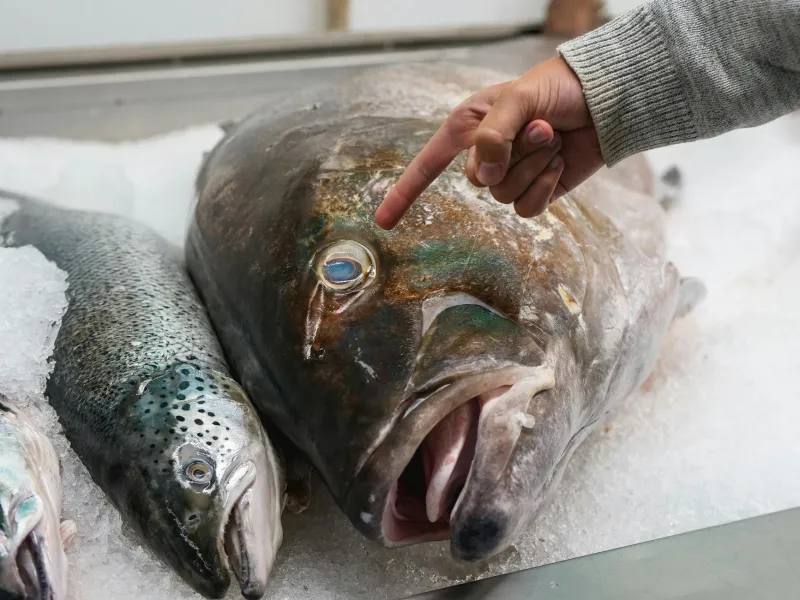
The Fresh Fish Illusion
Walk up to any grocery store seafood counter and you'll see rows of glistening salmon labeled 'fresh.' The fish looks vibrant, the ice is pristine, and the price reflects what you'd expect to pay for something that was swimming recently. What the signs don't tell you is that nearly every piece was frozen solid for weeks or months before arriving at that ice display.
Most Americans operate under a simple assumption: fresh fish means never-frozen fish. It's a reasonable guess that turns out to be completely wrong.
What 'Fresh' Actually Means (Legally Speaking)
The FDA's definition of 'fresh' fish might surprise you. According to federal regulations, fish can be labeled 'fresh' as long as it hasn't been frozen below 26°F. That's a crucial detail because commercial fishing operations routinely freeze fish at temperatures just above that threshold — technically keeping it 'fresh' while preserving it for transport.
But here's where it gets more complicated: even fish frozen well below 26°F can be thawed and sold as 'fresh' with no legal requirement to disclose its frozen history to consumers. The only exception is if the fish was frozen for preservation purposes specifically, in which case it should be labeled 'previously frozen.'
In practice, this distinction is rarely enforced at the retail level.
The Reality of Commercial Salmon
Nearly all salmon sold in American grocery stores follows the same path: caught on fishing boats that stay at sea for days or weeks, immediately frozen or super-chilled, transported to processing facilities, and eventually thawed for display at your local store.
Farmed salmon follows a similar route. Even though it's harvested on a more predictable schedule than wild-caught fish, it's typically frozen for transport from farms in Norway, Chile, or Scotland to American markets.
The 'fresh' salmon at your grocery store was likely caught or harvested weeks ago, frozen within hours, and thawed sometime in the last few days before you see it.
Why Previously Frozen Can Be Better
Here's the part that challenges everything you think you know about fish quality: properly frozen fish is often safer and better than what most people imagine 'fresh' fish to be.
When fish is frozen immediately after being caught — which happens on virtually every commercial fishing operation — it locks in freshness at its peak. Compare that to truly never-frozen fish that might sit on ice for a week during transport, and the frozen option often wins.
The FDA actually requires fish intended for raw consumption (like sushi) to be frozen first to kill parasites. That pristine sashimi you're paying premium prices for? It was definitely frozen.
The Questions You Should Actually Ask
Instead of asking 'Is this fresh?' at the seafood counter, try these questions:
'When was this thawed?' gives you a better sense of actual freshness than the meaningless fresh label.
'Was this frozen on the boat or after transport?' helps you understand the quality of the freezing process.
'What day do you get your deliveries?' tells you the maximum time that fish has been sitting in the case.
A good fishmonger will answer these questions honestly. If they seem confused by them, that's probably a sign to shop elsewhere.
Why the Myth Persists
The 'fresh means never frozen' assumption persists because it feels intuitive. We apply the same logic to other foods where fresh genuinely means recently produced — bread, vegetables, dairy products.
But fish is different. Unlike a tomato that starts degrading the moment it's picked, fish quality depends more on how quickly it was chilled after being caught and how well the cold chain was maintained.
Grocery stores also have little incentive to educate customers about freezing practices. 'Fresh' sells better than 'previously frozen,' even when the previously frozen option is objectively better.
The Bottom Line
That beautiful salmon display isn't lying to you, exactly — it's just operating under definitions that don't match common understanding. The fish is fresh in the sense that it's been kept cold and hasn't spoiled, but it's almost certainly been frozen at some point.
The good news is that this doesn't mean you're getting ripped off. Properly frozen and thawed fish can be excellent, sometimes better than fish that's been sitting 'fresh' for days.
Next time you're at the seafood counter, focus less on whether the fish was ever frozen and more on how recently it was thawed and how well it's been handled since then. Your nose and eyes are better indicators of quality than any label.