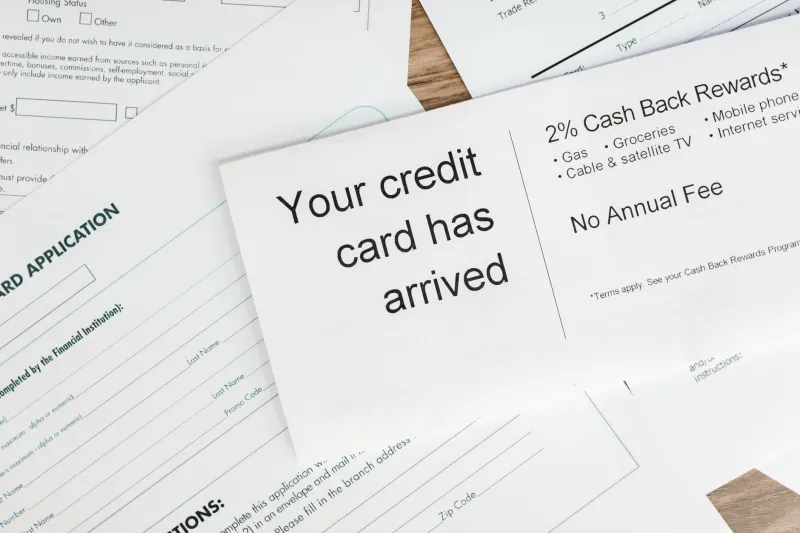
Renting Isn't Throwing Money Away — That Idea Was Sold to You By People With Something to Gain

Photo: Kaap bij Sneeuw, CC0, via Wikimedia Commons
Renting Isn't Throwing Money Away — That Idea Was Sold to You By People With Something to Gain
At some point, almost every renter in America hears some version of it. Maybe from a parent, maybe from a coworker, maybe from a real estate agent sitting across a table with a stack of listings. "You know you're just throwing money away, right?"
It lands with the confidence of a math fact. It gets repeated like one. And for decades, it's pushed millions of Americans toward homeownership under the assumption that renting is financially irrational — a monthly bonfire of cash with nothing to show for it.
The real story is more complicated. And the origin of that phrase is worth knowing.
Where the Idea Actually Came From
The "renting is throwing money away" narrative didn't emerge from independent financial research. It was cultivated, deliberately and effectively, by industries that profit when people buy homes.
The National Association of Realtors has run public campaigns promoting homeownership as a financial cornerstone of American life for most of the 20th century. Mortgage lenders have an obvious stake in the same message. The home-building industry, title companies, and appraisers all benefit from a cultural assumption that buying is always smarter than renting. These aren't fringe players — they're among the most well-funded lobbying groups in Washington.
The message worked because it attached itself to something real: over long stretches of time, in many US markets, home values have increased. That's true. But the conclusion drawn from it — that buying is always better than renting — requires a set of assumptions that almost nobody examines out loud.
The Math People Skip Over
When someone says a renter is "throwing money away," they're implying that a mortgage payment is building something while a rent check disappears. But a mortgage payment isn't pure equity-building. It's worth breaking down what actually happens in the early years of a typical 30-year loan.
In the first year of a $400,000 mortgage at a 7% interest rate, roughly 85% of each monthly payment goes toward interest — not principal. That interest payment goes to the bank. It doesn't build equity. By the strict logic of "throwing money away," a substantial portion of a mortgage payment qualifies.
Then there's the rest of what homeownership costs that rarely makes it into the comparison:
- Property taxes, which in many states run 1–2% of the home's value annually
- Homeowner's insurance
- Maintenance and repairs, which financial planners typically estimate at 1–2% of home value per year
- HOA fees in many communities
- Closing costs on purchase, typically 2–5% of the purchase price, which you lose immediately
- Transaction costs on sale, including agent commissions that often total 5–6%
A renter pays none of those. The flexibility of renting also has real financial value that never appears in a comparison spreadsheet — the ability to move for a better job, to avoid being anchored to a declining market, to keep capital liquid and investable.
The Circumstances Where Renting Wins Outright
This isn't an argument that renting is always better. It isn't. But there are specific, common situations where renting is the financially superior choice, and they don't get discussed honestly enough.
When you might move in the next five years. Transaction costs on buying and selling a home are steep. Most financial analysts agree you need to stay in a home for at least five to seven years just to break even on those costs. If your job, relationship, or life situation has any uncertainty in it, buying can be a financial trap.
When home prices are historically elevated relative to rents. There's a metric called the price-to-rent ratio. When it's high — as it has been in many major US cities in recent years — it means you're paying a significant premium to own versus rent the same type of property. In those markets, renting and investing the difference can outperform buying over a decade.
When your down payment would otherwise be invested. A $60,000 down payment locked into home equity isn't earning market returns. In a rising stock market, that opportunity cost is real and measurable.
When you're in an expensive metro area. In cities like San Francisco, New York, Boston, or Seattle, the gap between what a home costs to buy and what it costs to rent the equivalent space can be enormous. The math in those markets frequently favors renting — which is why many financially sophisticated people in high-cost cities rent by choice.
 Photo: New York, via www.worldatlas.com
 Photo: San Francisco, via cdn.britannica.com
Why the Myth Keeps Going
The persistence of "renting is throwing money away" isn't just about industry messaging, though that's part of it. It's also about how Americans have historically experienced homeownership. For much of the postwar 20th century, buying a home in a growing suburb was genuinely one of the best financial decisions a middle-class family could make. Home prices rose steadily, mortgage rates were manageable, and transaction costs were lower.
That experience became cultural memory. It became advice passed from parents to children, repeated across generations as if the conditions that made it true were permanent and universal.
They aren't. The housing market of 2024 is not the housing market of 1978. Prices, rates, and the economics of renting versus buying vary enormously by city, by decade, and by individual financial situation.
The Actual Takeaway
Buying a home can be a sound financial decision. For people who plan to stay put, have stable income, buy in a reasonably priced market, and can handle the illiquidity, it often is. But it's a decision that deserves honest math — not a culturally loaded phrase designed to make one option feel obviously correct.
Renting is paying for housing, just like a mortgage is paying for housing. Neither is inherently wasteful. The question is which one makes more sense given your actual life, your actual market, and your actual numbers.
Anyone who tells you renting is always throwing money away is either repeating something they never examined — or selling you something.