The 'No Added Sugar' Juice in Your Fridge Might Have More Sugar Than a Can of Soda
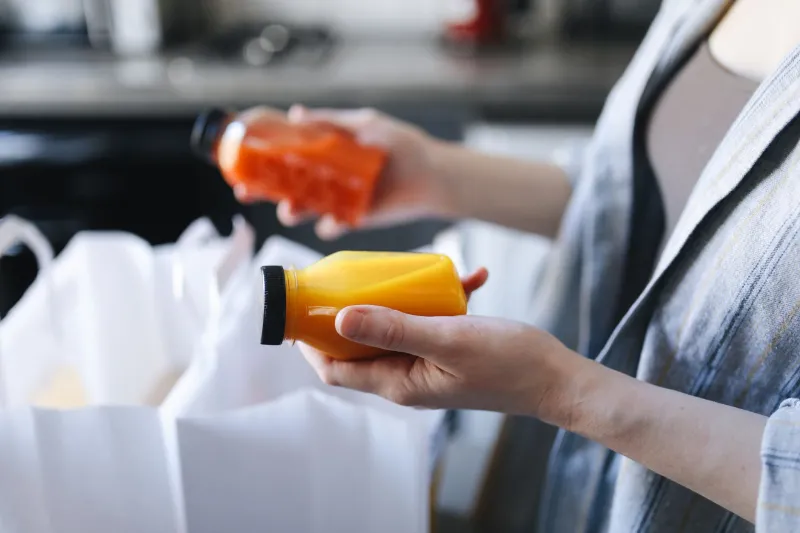
The 'No Added Sugar' Juice in Your Fridge Might Have More Sugar Than a Can of Soda
Stand in the juice aisle of any American grocery store and you'll see the phrase "no added sugar" on dozens of bottles. It's positioned as a virtue — a signal that this product is the responsible choice, the one that belongs in a healthy household. Parents buy it for their kids. Dieters buy it for themselves. It sits next to the vitamin water and the kombucha and radiates a general sense of doing the right thing.
But the label is doing something specific and narrow. It's telling you that no one poured extra sugar into the bottle during processing. It says nothing at all about how much sugar is already in there — and in many cases, the answer is: a lot.
What the Label Actually Says
The FDA's definition of "no added sugar" (sometimes written as "without added sugars" or "no sugar added") refers specifically to sugars added during manufacturing or processing. It covers table sugar, high-fructose corn syrup, honey, fruit juice concentrates used as sweeteners, and similar ingredients. If none of those were added, the label is accurate.
What it doesn't account for is the sugar that exists naturally in the fruit itself. An eight-ounce glass of 100% orange juice — the kind with no added sugar, not from concentrate, premium brand — contains roughly 21 to 26 grams of sugar. A 12-ounce can of Coca-Cola contains 39 grams. Adjust for serving size and the gap narrows considerably. Some juices, particularly grape juice and pomegranate juice, contain more sugar per ounce than most sodas.
The label is technically accurate. The impression it creates is not.
Why Fruit Sugar Isn't a Free Pass
The most common defense of juice sugar is that it's "natural" — fructose from fruit rather than the added sugars in soda. This distinction sounds meaningful, but nutritionally, it's largely cosmetic once you're talking about juice rather than whole fruit.
When you eat a whole orange, you're getting fiber, water, and sugar in a package that slows digestion and moderates the glucose response. Your body processes it gradually. When you drink orange juice, the fiber is largely gone — removed during pressing — and you're left with a concentrated liquid sugar delivery system that your liver and bloodstream process much the same way they process the sugar in a soft drink.
Research on this has been fairly consistent for years. A 2013 study published in BMJ found that consuming whole fruits was associated with reduced risk of type 2 diabetes, while fruit juice consumption was associated with increased risk. A 2019 study in JAMA Network Open linked regular juice consumption to higher overall mortality risk at higher consumption levels. The sugar in juice isn't poison, but the body doesn't treat it as meaningfully different from other liquid sugars simply because it came from fruit.
The American Academy of Pediatrics updated its guidelines in 2017 to recommend that children under age one avoid juice entirely, and that older children consume it only in limited amounts. The American Heart Association recommends limiting juice for similar reasons. These aren't fringe positions — they reflect decades of evidence that has gradually chipped away at juice's health halo.
 Photo: American Heart Association, via www.pngitem.com
 Photo: American Academy of Pediatrics, via m.media-amazon.com
How the Health Halo Got Built
Fruit juice has been marketed as health food in the United States since at least the early 20th century, when orange juice became associated with vitamin C and the prevention of scurvy. That association was legitimate — vitamin C deficiency was a real public health concern, and citrus juice was a practical solution.
The problem is that the marketing never really updated. The vitamin C message morphed into a broader "fruit juice is healthy" narrative that persisted long after most Americans were no longer at risk of scurvy, and long after nutritional science began raising concerns about liquid sugar consumption. The orange juice industry in particular invested heavily in advertising that kept the health association alive — Florida orange juice ads have featured everything from doctors to athletes for decades.
The "no added sugar" label is the modern version of this framing. It's not a lie, but it's a carefully chosen truth that invites a misleading conclusion. Shoppers have been trained to read "no added sugar" as a proxy for "low sugar" or "healthy choice," and the label does nothing to correct that assumption.
Reading the Label That Actually Matters
The nutrition facts panel is right there on every bottle, and it's more useful than the front-of-package claims. The "Total Sugars" line shows you exactly how much sugar is in a serving — added or otherwise. For most 100% fruit juices, that number will be 20 to 30 grams per eight-ounce serving, which is a meaningful amount of sugar by any reasonable standard.
For context: the American Heart Association recommends that women consume no more than 25 grams of added sugar per day, and men no more than 36 grams. A single glass of juice can get you close to or past those thresholds, even if every gram of that sugar is "natural."
Whole fruit is genuinely a better choice than juice in most circumstances. The fiber slows sugar absorption, the physical volume of eating an apple is more satisfying than drinking its juice equivalent, and the overall nutritional profile is more intact. If you enjoy juice, a small serving occasionally isn't a health crisis — but treating it as a free-range healthy beverage because the label says "no added sugar" is where the miscalculation happens.
The Takeaway
The "no added sugar" label on your juice tells you something true and something incomplete at the same time. It confirms that no one stirred in extra sweetener, and it says nothing about the substantial sugar load that was already there. Fruit juice has real nutrients, but it also has a sugar content that the front of the bottle is not designed to emphasize. Flipping it over and reading the actual numbers is the only way to know what you're actually drinking.