Scientists Actually Tested the 5-Second Rule. The Floor Didn't Get the Memo.
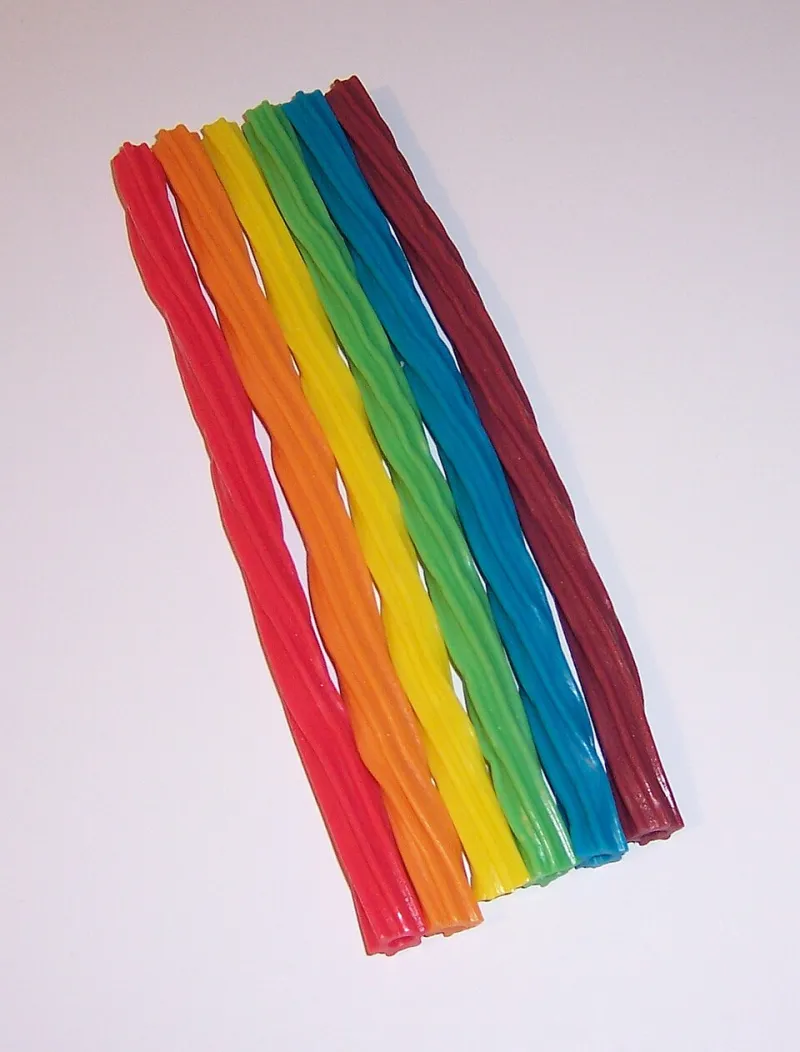
Photo: Kwanesum, Public domain, via Wikimedia Commons
Scientists Actually Tested the 5-Second Rule. The Floor Didn't Get the Memo.
Pretty much every American has done it. You drop a chip, a piece of toast, maybe a gummy bear, and before your brain can catch up, your hand is already reaching for it. The internal logic kicks in instantly: five seconds, still fine. You've been doing this since childhood, your parents probably did it too, and nobody ever got hurt. Right?
Here's the thing. A group of food scientists at Rutgers University decided to actually test that logic in a lab. And the results are the kind of thing that makes you wish you'd never asked.
 Photo: Rutgers University, via newbrunswick.rutgers.edu
What the Research Actually Found
The Rutgers study, led by food microbiologist Donald Schaffner and published in 2016, was one of the most thorough examinations of the 5-second rule ever conducted. The team tested four different surfaces — tile, carpet, wood, and stainless steel — using four different foods: watermelon, bread, buttered bread, and a gummy candy. They introduced a bacterial contaminant to each surface and then measured how much transferred to the food at contact times ranging from less than one second to five seconds and beyond.
 Photo: Donald Schaffner, via www.rutgers.edu
They ran the experiment over 2,500 times. That's not a casual afternoon project.
The headline finding: contamination happened at every contact time they tested, including under one second. There was no magic window where the floor wasn't a factor. The five-second threshold wasn't a safety zone — it was a story people told themselves.
That said, time did matter, just not in the way the rule implies. Longer contact meant more bacterial transfer. But the more significant variable wasn't time at all.
The Real Factor Nobody Talks About
What the Rutgers research made clear is that the type of food and the type of surface are far more predictive of contamination risk than how fast you pick something up.
Watermelon transferred bacteria at dramatically higher rates than gummy candy. Why? Moisture. Wet or high-moisture foods pick up bacteria far more readily than dry ones. The surface also played a role — carpet transferred less contamination than tile or stainless steel, which sounds counterintuitive until you consider that carpet has less direct contact area with the food.
So if you're dropping a dry pretzel on carpet, you're in a very different situation than if you're dropping a slice of mango on a tile kitchen floor. Neither is technically safe, but they're not the same risk level either.
The point isn't that every dropped piece of food will make you sick. It's that the five-second rule as a rule — as a reliable decision-making framework — doesn't hold up.
How a Joke Became a Guideline
The origin of the 5-second rule is murky, but food historians and folklorists have traced versions of it back centuries. Some credit a loose interpretation of Genghis Khan's food-handling customs (no, really), while others point to it simply being a piece of folk wisdom that emerged organically in kitchens across cultures.
 Photo: Genghis Khan, via hebstreits.com
What gave it staying power in American culture is probably its simplicity. It's a rule that makes you feel like you're still in control of a slightly chaotic situation. You dropped the thing, but you were fast — therefore you win. It transforms a minor food-safety question into a reflex test, which is a much more satisfying framing.
The five-second rule also got a boost from pop culture repetition. It's been referenced in TV shows, used in comedy routines, and passed down from parents to kids with the confidence of actual advice. At some point, enough people said it out loud that it started to feel like received wisdom rather than a coping mechanism.
Why the Misconception Is So Stubborn
Even after the Rutgers study got significant media coverage, the 5-second rule didn't disappear from American kitchens. That's not really surprising. Behavioral habits tied to convenience are hard to shift, especially when the consequences are invisible and delayed.
Food-borne illness is also notoriously difficult to trace back to a specific incident. If you pick up a dropped cracker and feel fine three days later, your brain logs that as confirmation the rule works. If you feel sick two days later, you're probably not connecting it to that moment on the kitchen floor. The feedback loop just isn't tight enough to change behavior.
There's also a real element of risk tolerance at play. Most people understand, on some level, that floors aren't sterile. The 5-second rule isn't really about believing the floor is clean — it's about deciding the risk is acceptable. That's a personal call, and for most healthy adults eating at home, a single exposure to floor bacteria is unlikely to cause serious harm.
But that's a different thing than the rule being scientifically valid.
The Actual Takeaway
You don't have to become someone who throws away every dropped piece of food without a second thought. But it's worth knowing what you're actually deciding when you invoke the rule.
The real variables are moisture content, surface type, and how contaminated that surface actually is — not the speed of your reaction. A dry cracker dropped on a clean carpet at home is a different calculation than a strawberry dropped on a public restroom floor. The five-second rule treats all of those situations the same, which is exactly why it doesn't work as actual food safety guidance.
The floor doesn't pause while you count.