Henry Ford Didn't Decide Which Side of the Road Americans Drive On — Wagon Drivers Did, Two Centuries Earlier
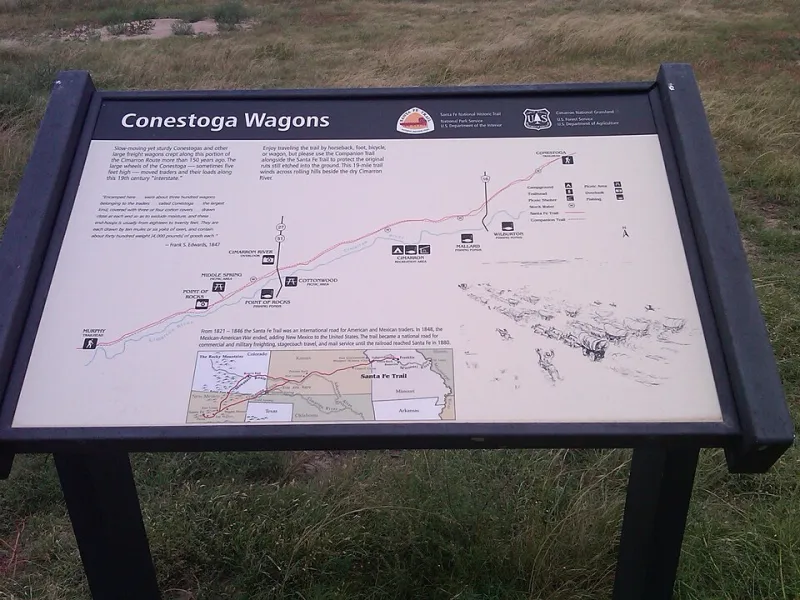
Photo: National Trails Office (US National Park Service), Public domain, via Wikimedia Commons
Henry Ford Didn't Decide Which Side of the Road Americans Drive On — Wagon Drivers Did, Two Centuries Earlier
Ask most Americans why we drive on the right side of the road and you'll get one of two answers: either a vague gesture toward being different from the British, or a specific claim that Henry Ford's Model T locked it in because the driver's seat was on the left. The Ford explanation sounds precise enough to be credible, and it gets repeated often enough that it has the texture of established fact.
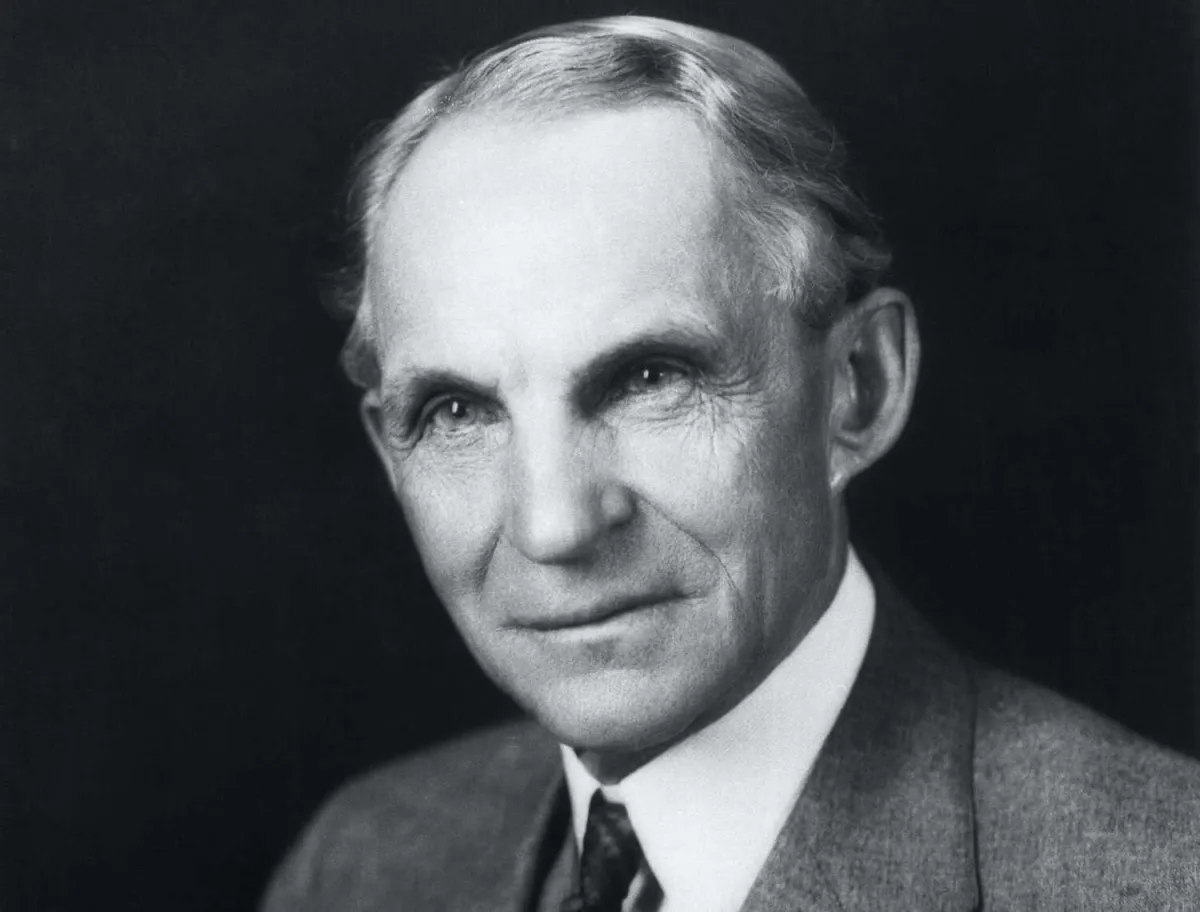 Photo: Henry Ford, via facts.net
It isn't. The United States had largely committed to right-side driving decades before the Model T rolled off the line in 1908 — and the actual origin of the convention has almost nothing to do with automobiles.
The Road Was Already Settled Before Cars Arrived
Pennsylvania passed what is considered the first American keep-right traffic law in 1792, governing the use of the Philadelphia and Lancaster Turnpike. New York followed with similar rules in the early 1800s. By the mid-nineteenth century, right-side traffic was the dominant norm across most of the United States — enforced by local ordinance, embedded in road design, and simply practiced as common sense by anyone moving goods or people overland.
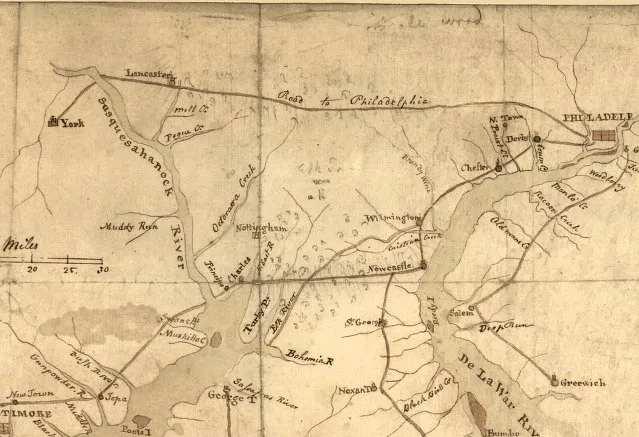 Photo: Philadelphia and Lancaster Turnpike, via i0.wp.com
This was all happening in an era when the fastest thing on most American roads was a horse. The automobile industry didn't exist. Henry Ford was not yet born. The convention that would later shape the entire American driving experience was already taking hold based on entirely different transportation logic.
The Actual Origin: Freight Wagons and the Physics of Driving a Team
The real story starts with the Conestoga wagon, the large freight hauler that became the workhorse of American commerce in the late 1700s. These wagons were massive — designed to carry heavy loads across unpaved roads — and they were typically pulled by teams of four to six horses.
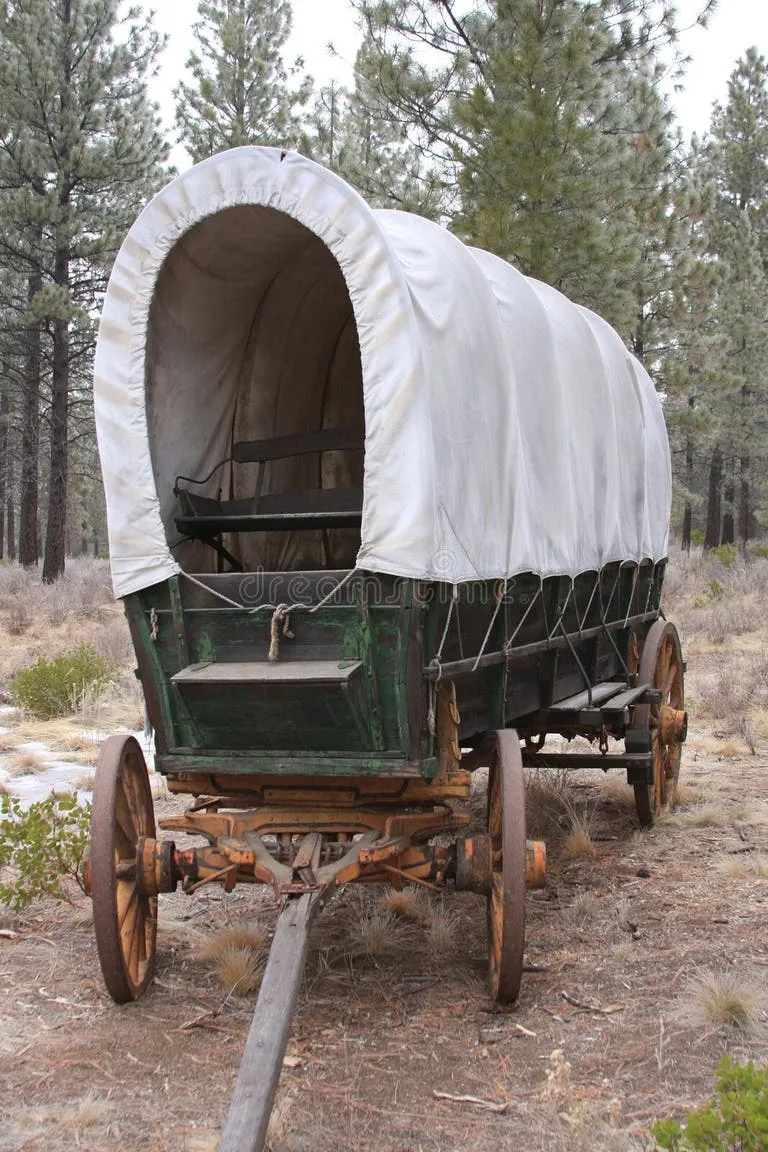 Photo: Conestoga wagon, via thumbs.dreamstime.com
The teamster, the person responsible for driving the wagon, didn't sit on a box seat the way a stagecoach driver would. On a Conestoga, the driver either walked alongside the team or sat on the left rear horse — the wheel horse, as it was called. That position gave the driver the best control over the animals using a whip held in the right hand.
Here's where road positioning enters the picture. When two wagons approached each other from opposite directions, the drivers needed to judge clearance carefully to avoid a collision. A teamster sitting or standing on the left side of his wagon had a much cleaner sightline to the left edge of the road — the critical reference point for judging whether two vehicles could pass safely — if traffic kept to the right. Keeping right put the driver closest to the center of the road, where the passing action happened, and gave him the best view of the potential collision point.
This wasn't a law or a policy decision. It was a practical solution that spread organically because it worked. Teamsters adopted it, other road users followed, and over time it became the default expectation on American roads.
So Where Does the Ford Story Come From?
The Model T connection isn't entirely invented — it's just misapplied. Ford did make a significant decision when he placed the steering wheel on the left side of the Model T, which was unusual for American cars at the time. Many early automobiles were built with right-hand drive, partly out of habit carried over from European designs.
Ford's reasoning was practical and customer-focused. With left-hand drive, the driver exits the car onto the sidewalk or shoulder rather than into traffic. Passengers in the front seat can also exit safely on the curb side. For a country that was already driving on the right, left-hand drive made genuine ergonomic sense.
The Model T's commercial dominance — it became the best-selling car in America and held that position for years — meant that left-hand drive became the industry standard for American automobiles. Other manufacturers followed Ford's lead because consumers expected it. In that sense, Ford did shape something real about American driving.
But he shaped the position of the steering wheel, not the side of the road. Those are related but distinct questions, and conflating them is where the myth gets its traction.
Why the Ford Version Persists
The Ford story has a few qualities that make it stickier than the wagon story. It's more recent, so it feels more verifiable. It involves a famous name that most Americans recognize. And it connects the driving convention to the automobile itself, which seems like the logical place for a driving rule to originate.
The wagon explanation requires a bit more historical imagination — you have to picture a pre-industrial America where freight movement by horse team was a central fact of economic life, and where the practical decisions of working teamsters could ripple outward into lasting social norms. That's a less tidy narrative, even if it's the accurate one.
The Takeaway
The side of the road Americans drive on was determined not by an industrialist or a government committee, but by the accumulated practical decisions of wagon drivers navigating muddy roads two centuries ago. It's a reminder that many of the systems we treat as deliberate design choices are actually inherited habits — solutions to problems that no longer exist, locked in long before anyone thought to write them down as rules.