Shrinking Airline Seats Aren't About Cheap Fares — They're About Selling You the Upgrade
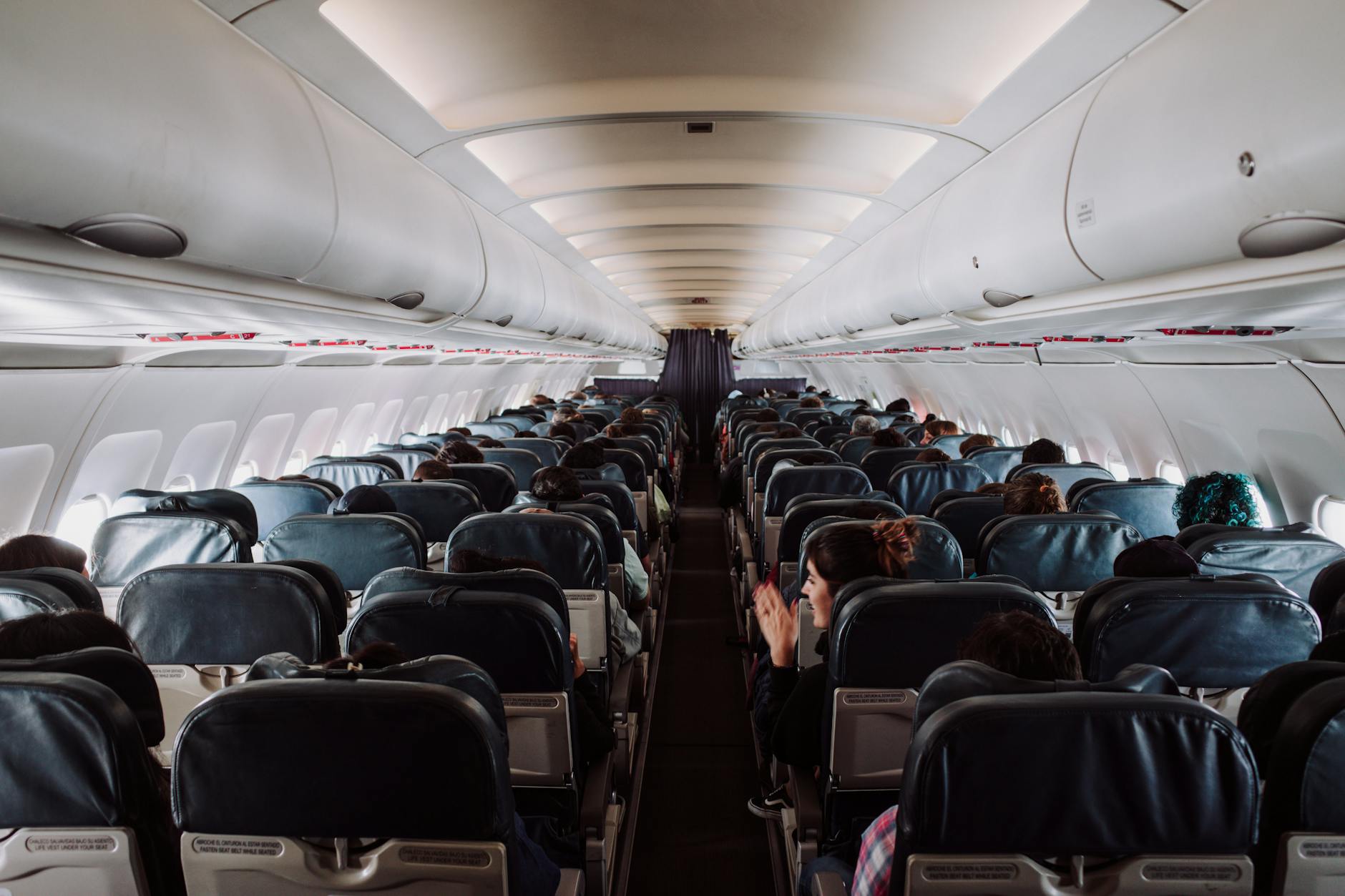
Shrinking Airline Seats Aren't About Cheap Fares — They're About Selling You the Upgrade
Anyone who has flown economy class in the last ten years has felt it — the knees pressed against the seat back in front of you, the armrest you're silently fighting over, the vague sense that the cabin got smaller since the last time you flew. You probably accepted it as the obvious trade-off for an affordable ticket. Airlines are competing on price, and something has to give.
That explanation isn't entirely wrong. But it's only about half the story — and the half that gets left out is considerably more interesting.
How Much Has Legroom Actually Shrunk?
The numbers are real and they're not trivial. In the 1990s, the standard seat pitch in economy class — the distance between one seat and the seat directly behind it, which roughly corresponds to legroom — hovered around 34 to 35 inches on most major US carriers. Today, many airlines have compressed that to 28 or 29 inches on domestic routes. Some budget carriers have pushed it even further.
Seat width has followed a similar trajectory. A typical economy seat in the 1980s measured about 18 inches across. On many modern aircraft, particularly the Boeing 737 MAX and reconfigured narrow-body jets, that number has dropped to 16.5 or 17 inches.
For context, the average American adult is physically larger today than they were 40 years ago. The seats went the other direction.
What the FAA Actually Regulates — and What It Doesn't
Here's where the story gets genuinely surprising. Despite years of passenger complaints and multiple congressional hearings, the FAA has no binding minimum standard for seat pitch or seat width on commercial flights in the United States.
The agency does regulate emergency evacuation requirements — specifically, airlines must demonstrate that a full plane can be evacuated in 90 seconds or less. But the FAA has consistently declined to translate that standard into specific seat dimension rules, arguing that evacuation testing accounts for whatever configuration an airline chooses to operate.
In 2018, a federal court actually ordered the FAA to address the issue after advocacy groups challenged the agency's inaction. The FAA reviewed the evidence and concluded that existing seat sizes did not pose a safety risk — a finding that frustrated consumer advocates but left airlines free to configure cabins however they saw fit.
The result is that seat size in the US is almost entirely self-regulated by the airlines themselves. And airlines, unsurprisingly, have not regulated themselves toward more space.
The Real Business Logic Behind the Squeeze
Here's the part of the story that the "you get what you pay for" framing conveniently skips over: airlines didn't just shrink economy seats to add more rows and lower ticket prices. They shrunk economy seats to make the contrast with premium cabins more dramatic — and more sellable.
This is sometimes called "unbundling," and it's one of the most significant business model shifts in commercial aviation history. Starting in the mid-2000s and accelerating sharply after the 2008 financial crisis, US carriers systematically stripped features out of the base fare — legroom, seat selection, carry-on bags, meals — and repackaged them as paid add-ons.
The logic is straightforward once you see it. If economy class is uncomfortable enough, a meaningful percentage of passengers will pay to escape it. Not necessarily into business class, which is expensive, but into "Economy Plus," "Main Cabin Extra," "Comfort+," or whatever a given airline calls its slightly-less-miserable middle tier. Those seats are often just the same seats that used to be standard economy, with a few extra inches of pitch restored.
In other words: airlines didn't just respond to passenger demand for cheaper flights by making seats smaller. They made seats smaller to manufacture demand for a product that didn't need to exist before the seats got smaller.
The Psychological Architecture of Discomfort
Aviation analysts have a term for this: "product segmentation through degradation." It sounds clinical, but the concept is intuitive. If your worst product is genuinely unpleasant, your mid-tier product looks like a reasonable upgrade. The more uncomfortable the base experience, the more compelling the upsell becomes.
Airlines have become sophisticated practitioners of this principle. The placement of extra-legroom rows, the boarding group structure that forces economy passengers to walk past the wider seats at the front, the in-flight screens that show upgrade availability mid-flight — all of it is a carefully managed experience designed to nudge passengers toward spending more.
None of this is secret, exactly. Industry analysts and aviation journalists have written about it for years. But it rarely makes it into the mainstream conversation about why flying feels so miserable, which tends to stay focused on the simpler narrative of cheap fares and trade-offs.
What Flyers Can Actually Do
Understanding the real mechanics doesn't automatically make the flight more comfortable, but it does change the calculus a little.
Knowing that seat size is unregulated means you can comparison-shop more precisely — tools like SeatGuru allow you to check the actual seat dimensions on a specific aircraft before you book. Knowing that "Economy Plus" is often just restored standard legroom means you can decide whether the upgrade price is worth it with clearer eyes.
And knowing that the discomfort is, at least in part, deliberately engineered means you don't have to feel like you made a bad personal choice by booking economy. You're not experiencing the natural consequences of wanting an affordable ticket. You're experiencing a product that was designed to feel exactly this way.