The Great Wall Myth Has Been Debunked for Decades. Here's Why We Still Repeat It.
The Great Wall Myth Has Been Debunked for Decades. Here's Why We Still Repeat It.
At some point in your education — maybe a geography class, maybe a trivia night, maybe just a confident uncle at Thanksgiving — you heard it: the Great Wall of China is the only man-made structure visible from space. It's one of those facts that sticks. It has the satisfying ring of something both extraordinary and verifiable. It makes the Great Wall feel even more impressive than it already is.
There's just one problem. It isn't true. It has never been true. And the people with the clearest view of the matter — astronauts who have actually been up there — have said so explicitly.
So how did this myth get started? Why has it survived for so long despite clear evidence against it? And what does its persistence tell us about how misinformation spreads through culture?
What Astronauts Actually See
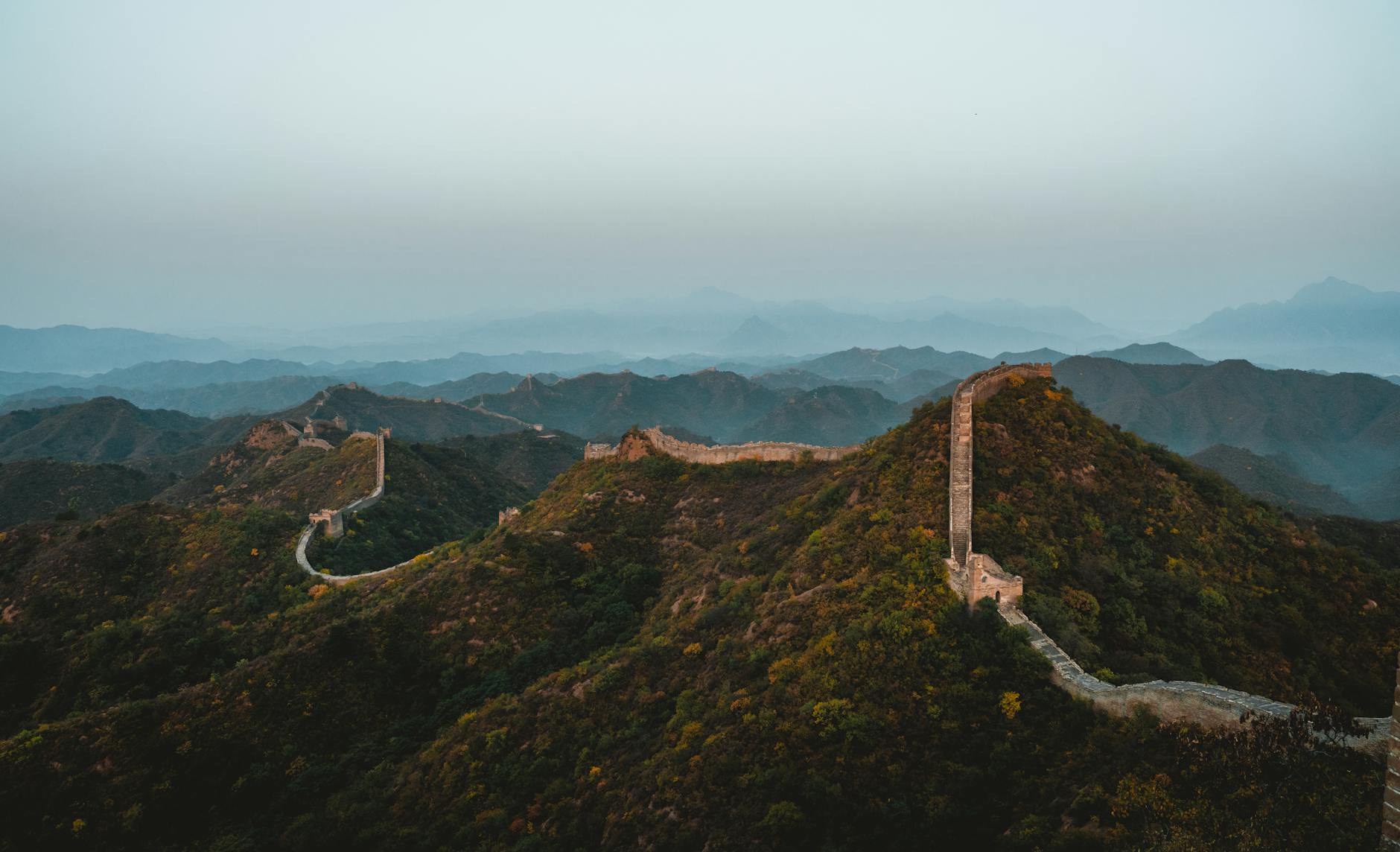
Let's start with the basic facts. The Great Wall of China stretches roughly 13,000 miles across northern China — an undeniably massive construction project. But impressive length isn't the same as visual visibility. The wall is, at most, about 30 feet wide. From low Earth orbit — the altitude where the International Space Station operates, roughly 250 miles up — spotting something 30 feet wide would be the equivalent of seeing a human hair from two miles away.
NASA has addressed this directly. Chinese astronaut Yang Liwei, who became the first person China sent to space in 2003, specifically looked for the wall during his mission and couldn't find it. He said so publicly. NASA's own educational resources note that the wall is "generally not visible" from orbit under normal conditions, and that even from low Earth orbit, it would require exceptional atmospheric clarity and knowing exactly where to look.
In 2004, astronaut Leroy Chiao did manage to photograph what may have been a section of the wall from the ISS — but only with a powerful zoom lens, and he wasn't certain of what he'd captured until analysts examined the image. That's not quite the same as casually gazing out a window and spotting a structure.
The wall simply isn't wide enough to be seen with the naked eye from space. That's the whole story, scientifically speaking.
Where Did This Idea Come From?
The origin of the myth is surprisingly old — and it predates space travel entirely, which is itself a strange thing to sit with.
The earliest known version of the claim appears in a 1932 entry in Ripley's Believe It or Not, which described the Great Wall as "the mightiest work of man — the only one that would be visible to the human eye from the moon." Not from low Earth orbit. From the moon — which is roughly 239,000 miles away, making the claim even more geometrically absurd.
A similar assertion appeared in a 1938 book, and the idea continued circulating through popular publications over the following decades. By the time humans actually reached space in the 1960s, the claim was already embedded in popular culture as received wisdom. Nobody had checked it rigorously because, until Yuri Gagarin went up in 1961, checking it wasn't possible.
Once space travel became real, you might expect the myth to have been quickly corrected. But corrections rarely travel as fast as a good story — especially when the story makes something already impressive sound even more extraordinary.
Why the Myth Proved So Hard to Kill
This is where the Great Wall story becomes a useful case study in how misinformation works.
First, the claim is emotionally satisfying. It takes something genuinely remarkable — one of the largest construction projects in human history — and adds a cosmic dimension to it. The idea that human effort could be visible from the edge of space is a compelling image. It makes the wall feel almost mythological.
Second, the myth was laundered through trusted institutions. Once it appeared in textbooks and encyclopedias — which it did, repeatedly, through the latter half of the 20th century — it acquired the authority of verified fact. Students didn't learn it from a rumor. They learned it from official educational materials, which is exactly the kind of source you're supposed to trust.
Third, and perhaps most importantly, the people most likely to correct it — astronauts and scientists — don't have nearly the cultural reach of a textbook or a trivia card. Yang Liwei's honest statement about not seeing the wall got some press coverage in 2003, but it competed with decades of accumulated repetition. A single correction, even from a credible source, rarely undoes that kind of institutional momentum.
What This Tells Us About How We Believe Things
The Great Wall myth is a clean example of what researchers sometimes call "sticky misinformation" — false beliefs that spread easily because they're simple, surprising, and emotionally resonant. These kinds of claims don't survive because people are gullible. They survive because they fit comfortably into existing frameworks about the world.
We already know the Great Wall is impressive. We already have a sense that human achievement can be staggering. The space-visibility claim doesn't ask us to believe something totally foreign — it just asks us to extend a feeling we already have, and that's a much easier sell.
It also persists because the correction is less interesting than the myth. "The wall is actually too narrow to see from orbit due to angular resolution constraints" is accurate. It is also, compared to the original claim, deeply unsatisfying to repeat at a dinner party.
The Real Takeaway
The Great Wall of China doesn't need the myth. It's a 2,000-year-old engineering project that crosses mountains, deserts, and river valleys, built by millions of workers across multiple dynasties. That's genuinely extraordinary without any embellishment.
But the persistence of this particular myth is worth understanding — not because believing it makes you foolish, but because almost everyone believed it. It was in our textbooks. It was on trivia cards. It felt like knowledge.
The real story here isn't about China or space. It's about how a plausible-sounding claim, once it gets into trusted channels, can outlast any number of corrections. Which is probably worth keeping in mind the next time something sounds like a fact you've always known.