The 'Book Early and Save' Flight Advice Is Running on a Decade-Old Script

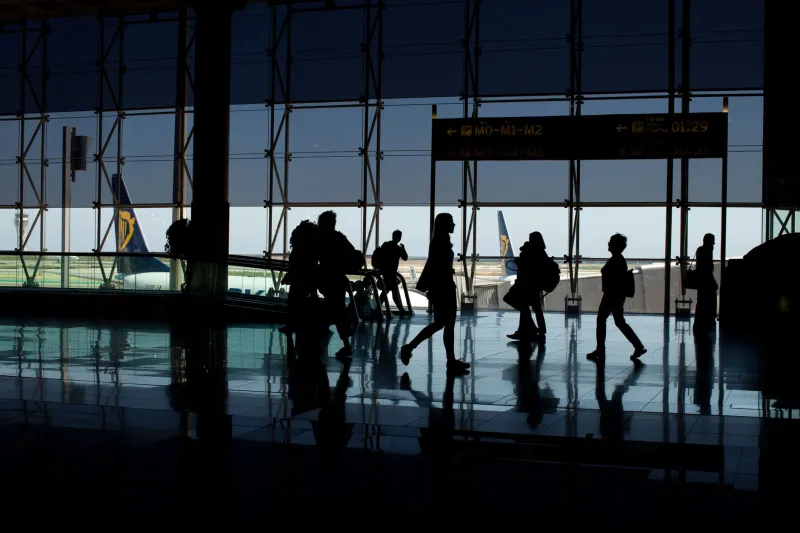
Photo: Familydestinationsguide.com Images, CC BY 2.0, via Wikimedia Commons
The Tip That Refuses to Die
Somewhere on the internet right now, a travel website is publishing an article that says you should book domestic flights six weeks in advance, international flights three to six months out, and never — under any circumstances — book on a Friday. It's confident. It cites a study. It probably has a colorful infographic.
It's also working from a playbook that airlines quietly retired years ago.
The frustrating part isn't that the advice is completely wrong. It's that it was once right enough to stick, and now it circulates endlessly while the actual mechanics of airline pricing have shifted underneath it at least three or four times. Understanding why that happens — and what's actually true now — changes the way you shop for flights.
Where the 'Six Weeks' Rule Came From
The conventional booking wisdom traces back to a more predictable era of airline pricing. For most of the 2000s and into the early 2010s, major carriers used relatively structured fare buckets. Each flight had a fixed number of seats assigned to each price tier, and those tiers filled roughly in sequence. If you watched carefully, you could identify patterns: prices often dropped on Tuesday afternoons because airlines matched competitors' weekend sales, and booking around six weeks out put you in a sweet spot before the final-week surge.
Travel journalists documented those patterns, readers shared the articles, and the advice calcified into received wisdom. The problem is that the airline industry treats its own pricing models as a competitive asset — and it keeps upgrading them.
What Changed (Several Times)
The shift away from predictable fare buckets accelerated around 2015 to 2016, when the major U.S. carriers began rolling out more sophisticated revenue management systems. Instead of filling static price tiers in sequence, these systems started adjusting fares dynamically based on real-time demand signals: how many people had searched that route in the last 24 hours, what competitors were charging at that moment, local events at the destination, even the day of the week the search was happening.
Then a second wave hit. Low-cost carriers like Spirit and Frontier pushed the unbundled fare model far enough that legacy carriers responded with their own basic economy tiers — stripping out seat selection, overhead bin access, and itinerary changes. That restructured what 'price' even means for comparison purposes.
COVID scrambled everything again. Airlines slashed capacity, accumulated enormous debt, and emerged with pricing behavior that analysts described as genuinely novel. Load factors — the percentage of seats filled — stayed high while fleets were smaller, which gave carriers less incentive to discount aggressively to fill planes.
By 2023 and 2024, the system had evolved again. Several airlines began testing or expanding personalized pricing, where the fare displayed can vary based on your search history, loyalty program status, or the device you're using. The idea that a single universal 'best time to book' exists becomes harder to defend when the price you see may not be the price someone else sees for the exact same seat.
Why Travel Writers Keep Getting This Wrong
This isn't entirely a laziness problem. Airline pricing data is genuinely hard to study. The carriers don't publish their algorithms, and the academic research that does exist — which is where a lot of the original 'book X weeks out' conclusions came from — tends to lag industry practice by several years. A researcher publishes findings in 2022 based on 2019 to 2021 data, a journalist writes it up in 2023, and readers absorb it as current truth in 2024.
There's also a structural incentive problem. Travel content websites earn affiliate revenue when readers click through to booking engines. A confident, specific tip — 'book six weeks out' — drives more clicks than 'it depends on the route, the carrier, the season, and factors you can't fully observe.' Vague accuracy doesn't perform as well as confident simplicity.
What Actually Works Right Now
Here's what the current evidence and pricing behavior actually support, with the caveat that this too will eventually need updating.
Set a price alert instead of guessing. Tools like Google Flights, Hopper, and Kayak's price tracking feature monitor specific routes and notify you when fares drop. This removes the guesswork entirely and responds to actual price movement rather than a theoretical booking window.
Understand that Tuesday sales are mostly gone. The practice of airlines dropping fares on Tuesday afternoons faded as real-time competitive matching made it unnecessary to wait for a specific day. Fares can drop on any day now.
Route type still matters more than timing. On heavily competitive routes — think New York to Los Angeles, or Chicago to Miami — dynamic pricing creates more volatility and more opportunities to catch a dip. On thinner routes with fewer competitors, fares tend to be less flexible regardless of when you book.
Basic economy math requires a full accounting. If you're comparing a $179 basic economy fare to a $219 main cabin fare, the comparison isn't over until you've priced out seat selection, carry-on policy, and change fee exposure. The 'cheaper' ticket frequently isn't.
The Real Takeaway
The best time to book a flight is when the fare you're looking at is acceptable to you, on a route you've been actively monitoring. That's less satisfying than a specific number of weeks, but it reflects how airline pricing actually behaves. The six-week rule worked in a world where airlines priced like they were following a script. They're improvising now — and your booking strategy should account for that.